

Shelfie: Liza Debevec
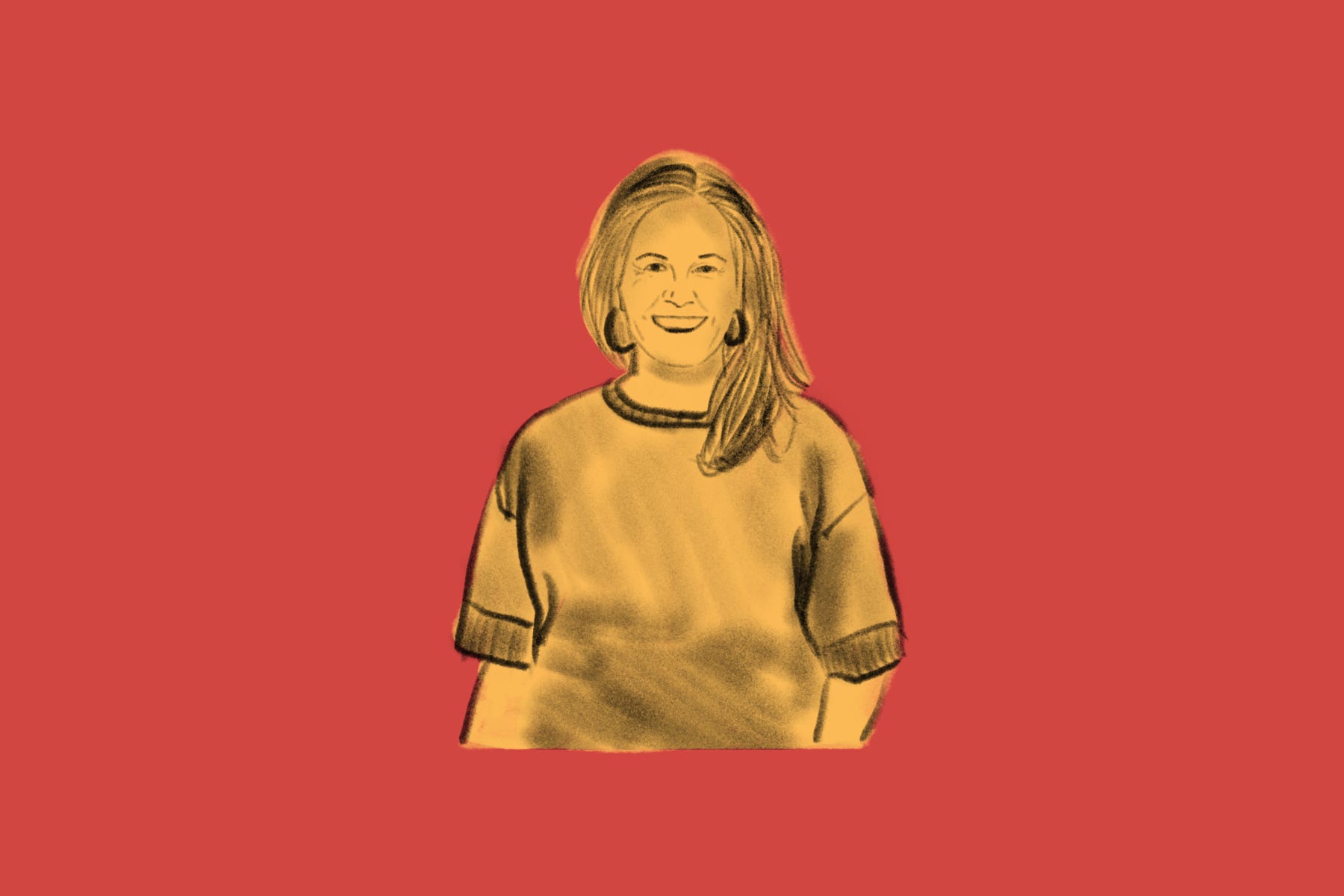
Liza Debevec is a social anthropologist, African studies specialist, coach and writer. This is her s(h)elfie.
Dear reader,
Welcome to Shelfie, the only part of Binge-Read where we can shamelessly judge people by their bookshelves (just kidding, no shelf-shame here!). Each edition, a reader spills the [drink of their choice] on their reading rituals, turn-ons and turn-offs, the titles that rewired their brain and even their own writing. Bonus points for messy nightstands and endless TBR piles. Want to show us yours? Reply to this email.
SHELFIE: LIZA DEBEVEC
THE MEET-CUTE
She’s in the middle of a conversation, even though no one is sitting across from her. She records a voice note, pauses, backtracks, tries out words the way someone samples fruit at a market, then chooses the one that tastes best, lingering on it. On the table, there’s an open book, a Portuguese edition. Another, in English, lies face down, as if it had been interrupted mid-thought. A third, with an unfamiliar spine, completes the scene. None of them seem to be there by chance. She notices your gaze resting on the books before she notices you. She smiles, briefly. “I’m not fluent,” she says, though no one has asked, as if the sentence has already passed through many conversations before this one. “But that’s not the most important thing.” You get to know her like this, slowly, in fragments—just as she seems to prefer. Slovenia, but a long time ago. Then Scotland, Burkina Faso, Ethiopia, Sweden. Not so much places as versions of a life. She says she works in international development and supports women in transition. The PhD in Social Anthropology comes up later, almost as an aside. As if it matters less than everything that followed. At some point, she mentions she speaks eleven languages. You wait for emphasis, for something to underline the achievement—but she just shrugs. As if to say: that’s what happens when you keep starting over. The coffee has gone colder than it should have, and she laughs about it—something about Sweden, about thinking she had left the cold behind, only to find it again in a different form. There’s a lightness to her—the kind that comes from having learned how to arrive, over and over again, in places that don’t quite fit yet.
→ Connect with her on Substack, her personal Instagram and her bookclub
THE DATE
The candles are lit, the beverage is poured — now tell us everything. This is where we get to know your reader self: the first book you fell for, the weird little habits, the genres you ghost, and the stories that left a mark. No small talk, we want the good stuff.
What book made you a reader?
(The gateway drug — we all have one.)
I am not good at remembering things from my childhood, but I do remember that when I was 8 1/2 (the half being an important marker at that age, I guess), I read [In Search of the Castaways or] The Children of Captain Grant by Jules Verne, and I read it several times in a row, or at least twice. As said, I don’t remember the details, but I remember the experience. Partly because I really enjoyed it, but also because I was on summer holidays on a remote island in what is now Croatia, but then was Yugoslavia (this was in 1982), and my parents only let me take one book with me. It was a thick book, but still, only one for a three-week holiday. So after I read it, and there were still at least 10 days left, I read it again. I think this was the moment when I not only discovered how much I loved reading, but also the beginning of my summer reading vacation concept, that I wrote about in my post Substack post called Mastering the Art of the Reading Vacation.
Have your reading tastes evolved over time?
(How so?)
For sure. And I feel like they are still evolving. In my first years as a reader, I loved books by Erich Kästner and Astrid Lindgren. By the time I was 10 or 11, I joined the main public library in my hometown and started borrowing adult books, meaning not just from the children’s section. I read detective stories, mostly Agatha Christie, but also some others whose names I don’t remember now, so I guess they didn’t really make an impression.
In high school, I read my way through the Western literary canon, with a particular obsession for Honoré de Balzac and Émile Zola. Midway through my undergraduate studies, I became interested in African authors and spent a decade mostly reading writers from the continent, and occasionally from the Indian subcontinent.
Over the last decade and a half, I’ve also become more interested in women authors, and more recently in memoir, which I hadn’t paid much attention to before. At this point, memoir is probably the genre I read most.
I also read books that fall into the category of self-help, though I tend to think of them more as personal development or leadership. When I was still working in social science research, I also read more academic books — which I don’t anymore, though I sometimes wish I did.
Which five books shaped your life, your voice, or your worldview?
(Childhood favourites, heartbreak companions, rereads that haunt you — all fair game.)
I chose food studies within social anthropology as a specialisation at the end of my undergraduate degree because of Kitchen, by the Japanese writer Banana Yoshimoto. I still love this book because it shows the importance of human connection, and how food can bring people together. It is about grief and loss, but also about love and connection.
To this day, I love reading food-related fiction and non-fiction, and I’ve recently started hosting calls as part of the Mastermind for Food Writers group on Substack, and will soon be co-hosting a book club for that group, reading foodie books.
I think I first read Deborah Levy in 2021. I borrowed Hot Milk from a friend — the title intrigued me — and I was mesmerised. I then discovered her essays in the Living Autobiography trilogy [Things I Don’t Want to Know, The Cost of Living and Real Estate], and have since become an absolute fan, especially of her essays. Her writing feels like a kind of permission slip for women writers to write and to live in ways that are not about shaping themselves for others. Just about being, and saying things as they are.
I mentioned that Yoshimoto’s Kitchen made me into a food anthropologist, but Sonja Porle’s Black Angel, My Guardian Angel [Črni Angel, Varuh Moj, in the original] gave me permission to travel to Africa, and later to specialise in African studies within anthropology. It is a beautiful semi-fictional travelogue by a Slovenian writer about a stay in Ouagadougou, Burkina Faso, a place I got to spend a lot of time in, but can’t return to for reasons of serious political instability, something I wrote about here.

When I read it, I was mesmerised and decided that I too would travel to West Africa, not realising this would change my life and that I would spend the next 23 years going back and also living on the continent for a number of years. I should add that I was not the only Slovenian woman in her early twenties who felt that way. In a small way, this is like a Slovenian version of Eat, Pray, Love, not in content, but in effect. It prompted more than a dozen Slovenian women to travel to West Africa by themselves. Given the scale of the country and the print run, that’s not insignificant.
While it may be too early to say, I feel like the writing advice books by Anne Lamott and Natalie Goldberg will have a lasting impact on me. I read them only recently, and yet I already notice a shift, both in how I observe the world, and in how I talk to myself when I sit down to write, especially when my inner critic shows up. Or when my monkey mind insists I should be reading Substack Notes and eating cookies instead of writing. I like to remind myself that Natalie Ginzburg liked cookies too and she still sat down and wrote.
Describe your ideal reading scenario.
(Location, lighting, beverage, ambience — paint the full picture.)
My favourite place to read would definitely be “my” Croatian island, the place of my reading vacation, lying on layers of beach mat and towels in the shade created by old pine trees, maybe a small airplane pillow, or lately also in a hammock.
Otherwise, any place with a nice reading chair (which I don’t have in my current apartment and miss), with a small coffee table on the side where I would have tea. I love coffee, but a nice Earl Grey with milk is the drink I associate with reading. Occasionally a glass of wine, though I feel like wine goes better with poetry than prose. I didn’t mention this earlier, but I love reading poetry, and my favourite poetry collection is Lavorare Stanca by Cesare Pavese.
Ideally, the room would have a view of greenery — trees, flowers, bushes — and maybe a bird would come and chirp within my eyesight for a moment. It actually feels like I am describing the reading room at my friends Margaret and Peter’s house in Nairobi. They are book lovers, and whenever I visit, I spend hours reading and watching birds.
Do you have a reading ritual or a weird habit?
(Must finish the chapter before closing it?)
I am not sure if this is a weird ritual, but I have to finish a book. I have very rarely given up on one. I think I can count the books I have abandoned on the fingers of one hand. That said, sometimes it takes me years to finish a book.
The only way I abandon a book is if I don’t own it, something borrowed from the library or picked up at a friend’s house. If I own it and don’t want to read it, I have to give it away so I don’t feel guilty. And I have to really dislike the book not to finish it.
I do like to finish a chapter before closing a book, so books without clear chapters stress me a bit. And I love stopping on a “round” number — page 30, 50, 100. I may be more compulsive than I realised.
Which book do you press into everyone’s hands?
(Your go-to literary evangelist moment.)
I don’t think I have just one. But I have many books that, over time, I have recommended. I feel like I have an inner school librarian — the kind who has a book for every occasion. I have been known to send a friend home with a book that felt “just right” after a long dinner conversation.
Usually people love the books I recommend, but occasionally I miss the mark. What saddens me is when people don’t return the books I lent them… I still remember and miss those books. So it might make more sense to buy them a copy, or simply make the recommendation. Holding onto resentment about a book someone will never return is not a nice emotion to keep.
Recently, I’ve been recommending books mostly in the area of personal growth and memoir writing. For personal growth: David Richo’s Five True Things, a more accessible version of Five Things We Cannot Change. And Come As You Are by Emily Nagoski. For writing: Kathy Rentzenbrink’s Write It All Down, Melissa Febos’ Body Work, and of course Bird by Bird by Anne Lamott and Writing Down the Bones by Natalie Goldberg.
I read Lamott and Goldberg only this year, but I would happily stand in a park, Jehovah’s Witness–style, and spread the gospel according to Annie and Natalie.
How do you treat your books — with reverence or reckless abandon?
(Are you a note-scribbler, dog-earer, spine-cracker, or pristine-pages kind of reader?)
Somewhere in between, though probably leaning towards reverence.
I don’t like writing my name in books, even if I own them. I’ve considered getting a stamp, but then feel it would make it harder to give books away.
I still remember lending an old French grammar book — one my mother had kept from her school years — to a classmate. When she returned it, she had written in it with a non-erasable pen. I was furious. Thirty-six years later, I still remember her name, and that memory is shaped by that act.
That said, I do sometimes write in books, but always in pencil. Occasionally I use a highlighter, but only in textbooks or manuals.
And I never fold pages, I use a bookmark, a sticky note, or book darts.
Ebooks, audiobooks, paperbacks, hardbacks — where do your allegiances lie?
(Or are you format-fluid?)
I prefer paper books, with no strong preference between paperback and hardback, though paperbacks are easier for travel.
I have a Kindle, a parting gift from colleagues in 2013, but I’ve recently been told it will soon become obsolete. I will not replace it, or if I do, it will not be by a Kindle because I really don’t want to give more money to Amazon. Still, I’m not a total Luddite. I see the value of ebooks, especially when travelling light.
I also have some audiobooks from a short-lived Audible phase, mostly memoirs. Trevor Noah’s Born a Crime was perfect in audio, as he reads it himself and is incredibly engaging. My audiobooks live on an old iPod that no longer connects to my computer, which is strangely ideal. It’s offline, so I can walk and listen without distractions. For the same reason, I liked my old Kindle, no mobile data, just the book.
What’s one genre or type of book you usually avoid — and why?
(No judgment. Well, maybe a little.)
There are many genres I don’t read, partly because I love non-genre fiction and there is already more to read than I can keep up with.
I don’t read horror, fantasy, or science fiction (though I’m curious about Ursula Le Guin). Also not romance, and not anything involving dragons or fairies.
I rarely read crime now, though I tried a few authors — Ian Rankin, Val McDermid, Peter Robinson, because a friend has a full library of them. I found them entertaining, but not something I would choose over the many other books I want to read.
What are you currently reading, and how’s it going?
(Be honest. We love a spicy DNF.)
I often read several books at the time, and so I am currently slow reading, with a friend from Substack, George Saunders’ A Swim in a Pond in the Rain1 — we started by sharing thoughts every week, for the first three chapters and now we bought got a bit stuck, and got drawn to other books and obligations, so I am trying to find time to focus on that book again.
I also just started reading The Unreliable Nature Writer, a collection of short stories by a British writer Claire Carroll. My friend Margaret, whose lovely house I mentioned earlier as being a perfect reading place, is a reader with a similar taste to mine and I saw this book on her shelves one time when I visited her and was drawn to the title. As it happens often, I buy too many books on one trip, so some get put aside, and this one had to wait almost two years to get picked up. I am still only on story number two, so I can’t say much, other than it is, as short stories often are, rather intriguing.
In addition to the above two, I am reading a cookbook, which has lots of essays, as well as great recipes. It is How to Eat a Peach, by the brilliant Diana Henry, whose book of essays Around the Table I read earlier this year and which I will be re-reading again next month as part of the Food Readers’ Book Club that I am co-leading on Substack for the Mastermind for Food Writers group.
And there are about five other books that I occasionally pick up and read a page of, but I can’t say I am really truly reading them at the moment.
THE LATE-NIGHT TEXTS
We know your reading life — now spill on your writing one. Whether you’re a full-time scribbler, a sometime poet, or hoarding half-finished drafts like a dragon with a hoard of metaphors, this is your moment. What are you writing, what haunts you, and what quote gets you through chapter two?
Do you write, too?
(Secret novelist? Fanfic queen? Occasional journaler? Tell us everything.)
I write, though less than I’d like to. I have two Substack publications:
I also write short memoir pieces, hoping to develop them into something longer, but I still lack a consistent writing practice.
I’ve been part of a writing experiment called The Chain on Substack led by Lindsay Johnstone, and some of us still meet online on Sundays to write for an hour. I love writing in community. I also find myself wishing I could start a writers’ group here in Lisbon.
Has reading shaped the way you write — or vice versa?
(How does your inner reader and writer get along?)
I don’t have a fully formed answer, but I would say yes. Reading memoirs, especially recently, has encouraged me to write more in that genre, and to trust that I don’t need every detail for a story to hold meaning. The anthropologist in me still wants to stay close to observed truth, sometimes to the point where it risks becoming too heavy for the reader.
What’s one piece of writing advice that’s stuck with you?
(A quote, a rule you live by, or something you happily ignore.)
“Just write” is the main one.
Also: don’t edit while writing, just keep going.
And reading your work out loud, because when you do that, your inner critic can’t speak at the same time. Natalie Goldberg talks about this in Writing Down the Bones, and I find it incredibly helpful.
What are you working on now, or what was the first manuscript you ever finished?
(A glimpse into your current WIP, that drawer novel from 2012, or your first published book. We want the behind-the-scenes.)
In 2012, I published an edited volume of anthropological essays on everyday religion. I contributed a chapter, co-wrote the introduction, and edited the other chapters from a group of anthropologists I had brought together at a conference panel. That was my only full experience of the book publishing process.
I have also published chapters in other academic books, but no other non-fiction or fiction yet (apart from some poetry in a high school literary journal in 1990).
I hope to publish some of my flash memoir pieces in the future, but they still need work, mostly rewriting, before they are ready for submission.
THE FINAL SPREAD
This is where we bare it all — messy bookshelves, bedside stacks (with bedside manners?), cute reading corners and lovingly curated nooks. We’ve your confessions, now we want the visuals. Show us the spines you’ve dog-eared, the piles threatening to topple, and that one chair you always mean to tidy. Your shelf. Your story. Your final spread.


[Click on the photos to see them in all their glory.]

If you enjoyed this issue, don’t forget to spread the word — the more, the merrier! I’d also love to hear your thoughts, so feel free to reach out. It helps keep this community growing and thriving.

If you’d like to support my writing, here are a few lovely ways to do it (thank you so, so much):
If you enjoyed this issue, don’t forget to spread the word – the more, the merrier! I’d also love to hear your thoughts, so feel free to reach out. It helps keep this community growing and thriving.
If you’d like to support my writing, here are a few lovely ways to do it (thank you so, so much):
Which also happens to be the April–May pick for my Portuguese-led book club, Marginalia.